
They say the eyes are the windows to the soul, but physiologically speaking, they’re really windows to the brain.
RightEye looks through that window[1] to detect common but often subtle vision issues resulting from concussions and other brain troubles. Its quick, portable eye-tracking station can tell in minutes whether you should see a doctor — or look into becoming a pro ball player.
It turns out there’s quite a lot you can tell from how someone’s eyes move. We may not notice it ourselves, but we all vary in how and how well we execute a number of basic tasks, from flicking our eyes back and forth to smoothly tracking a moving target. For instance, your eyes may over-correct, fail to line up correctly, or track up or down when moving along a straight line.
For healthy individuals, these variations fall within a safe range, just part of the ordinary differences between bodies. But certain patterns well outside the baseline can be strong indicators of things like concussions and eye muscle problems — and even Parkinson’s and Autism-spectrum conditions.
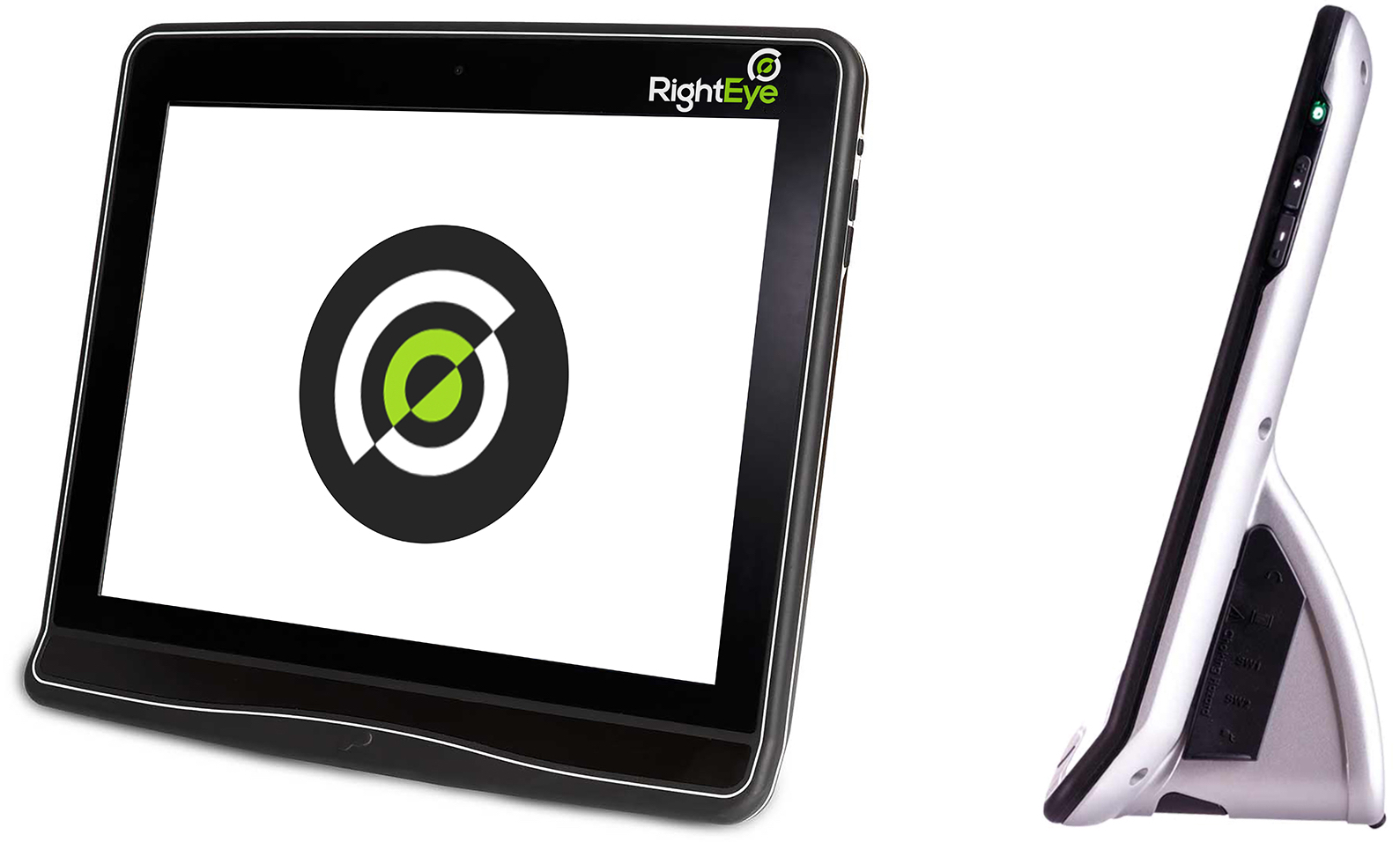 RightEye tracks these movements with a custom device that looks a bit like an all-in-one desktop; it uses a Tobii eye-tracking module[2] built into a single-purpose computer loaded with a library of simple tests. A basic EyeQ (as they call it) test takes five minutes or so, with more specialized tests adding only a few more, and results are available immediately.
To give you an idea: one test in game form has you defending a space station, destroying incoming ships by looking at them. But certain colored ships you must not destroy — meaning you have to detect them in your peripheral vision and avoid looking at them. In...